Termite activity in Southern California splits between drywood termites settling inside attic trusses or window frames, and subterranean termites tunneling from subterranean soil beds into crawlspaces. In Los Angeles,…
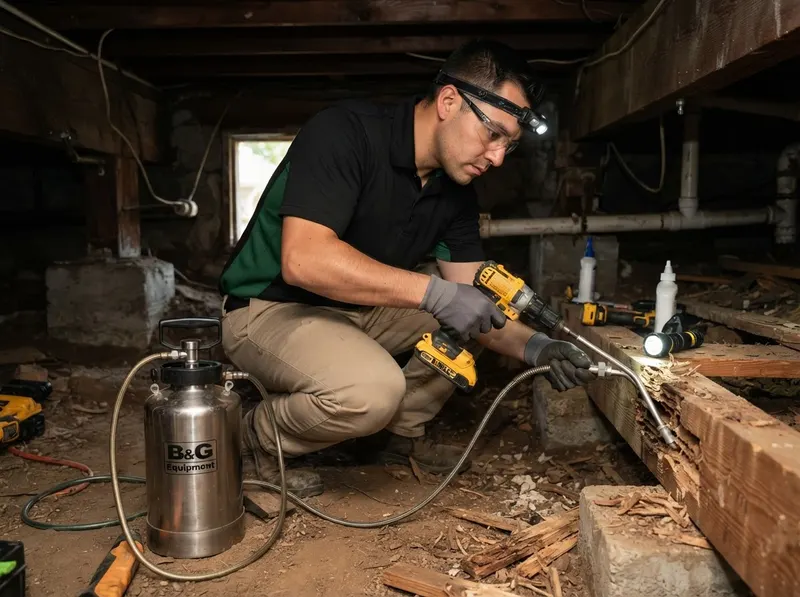
Termite activity in Southern California splits between drywood termites settling inside attic trusses or window frames, and subterranean termites tunneling from subterranean soil beds into crawlspaces. In Los Angeles, historic craftsman homes in Highland Park, mid-century hillside structures in Silver Lake and Echo Park, and multi-unit buildings in Koreatown present distinct access limitations. Hillside construction features stilts, stepped foundations, and direct soil contact that make standard whole-structure fumigation difficult and often unnecessary. Targeted low-toxicity liquid borate injections into drywood kick-out galleries destroy structural nests internally without requiring three days of tenant displacement or hazardous off-gassing around domestic pets. Subterranean termites require continuous non-repellent soil trenches along exterior perimeter stems, halting subterranean foraging before workers access baseplates and subfloors near moisture-rich plumbing penetrations.
Selecting localized precision treatment preserves household stability when compared to traditional whole-structure tent fumigation. Whole-structure fumigation treats drywood termites inside wood framing but delivers zero residual defense in exterior soil against western subterranean termites, leaving subfloors vulnerable to reinfection within months. Localized direct-wood injection paired with subterranean trenching creates an active perimeter barrier that persists for multiple years, safeguarding indoor cats and dogs from airborne toxins while eliminating the logistical cost of packing perishable pantry goods, relocating family members, or handling security risks associated with open, bagged properties in dense urban settings like Los Angeles.
Subterranean soil barriers require continuous trenching dug 6 inches wide and 6 inches deep around foundation footings, combined with foundation slab drilling every 12 inches across patio slabs in neighborhoods like Encino, Sherman Oaks, and Brentwood. Coastal air in Venice creates elevated moisture pockets that accelerate drywood swarm colonizations, whereas subterranean termites thrive near irrigation zones in inland valleys. Step one involves visual crawlspace and attic sounding to map moisture levels, wood hollows, and subterranean mud shelter tubes. Step two isolates active gallery points using localized structural pressure delivery. Step three establishes liquid exterior perimeter ground zones that foraging workers transfer back to the subterranean reproductive nest, eliminating the primary colony at the source without monthly subscription lock-ins.
Every job gets a firm, written price after a free on-site visit.
Tell us about your drywood and subterranean termite eradication job in Los Angeles and we'll send a clear, written quote, usually the same day.
 PestGuardian Plus