PestGuardian PlusPestGuardian Plus

Residential Rodent Exclusion and Trapping Los Angeles

Residential rodent control requires an architectural approach rather than chemical saturation. In hillside neighborhoods like Silver Lake, Los Feliz, and Echo Park, mature ficus trees, unclipped ivy, and steep property…
Get My Free Estimate →(424) 573-8526
Residential Rodent Exclusion and Trapping in Los Angeles, CA
Quick answer
  • Service scope: Exterior structural inspection, mechanical trapping in non-living areas, and sealing of foundation vents, roof junctions, and utility pass-throughs using galvanized wire mesh.
  • Arrival turnaround: Standard field evaluations are scheduled within 24 to 48 hours across the Los Angeles basin, with urgent containment scheduled same-day when crawlspace or attic activity compromises indoor air spaces.
  • Pricing standard: Field service begins at a base minimum charge of $250 for localized trapping and minor entry point sealing, while complete multi-point perimeter architectural exclusions scale upward based on linear footage.
  • Materials handled: Rodent exclusion addresses roof rats (Rattus rattus), Norway rats (Rattus norvegicus), and house mice (Mus musculus), using steel hardware cloth, metal flashing, and mortar rather than temporary foam.
  • Booking protocol: Direct dispatch arrangements occur by telephone at (424) 573-8526, where homeowners confirm architectural specifications and schedule an on-site structural audit.

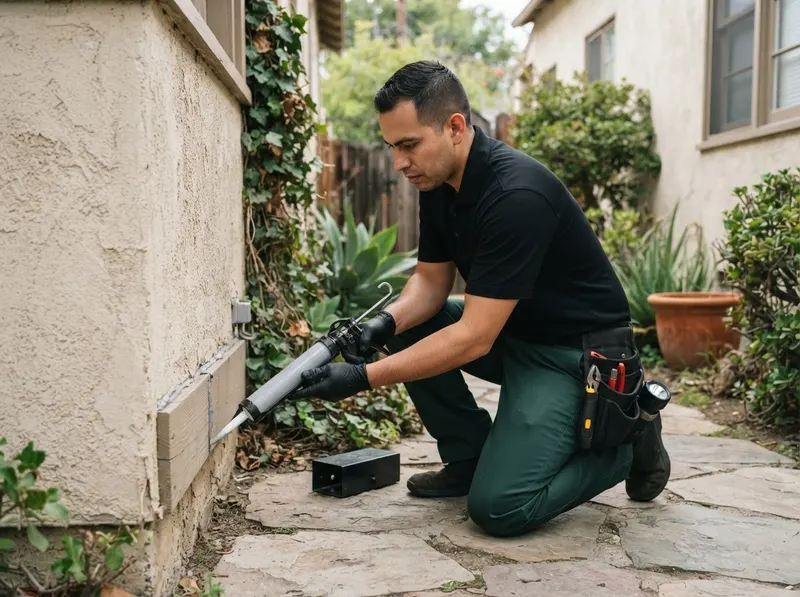
Residential rodent control requires an architectural approach rather than chemical saturation. In hillside neighborhoods like Silver Lake, Los Feliz, and Echo Park, mature ficus trees, unclipped ivy, and steep property grades grant roof rats immediate bridge access to clay tile eaves and wood fascia boards. Traditional snap traps placed randomly in living rooms fail to resolve active nesting cycles when the structure retains unsealed gaps around plumbing waste lines or perimeter crawlspace vents. True domestic protection begins with mechanical exclusion. Technicians seal subfloor ventilation screens with 16-gauge, quarter-inch galvanized hardware cloth, secure open chimney caps, and install fitted metal sweeps under loose garage doors. This physical barrier stops entry while protected mechanical traps placed in attics, drop ceilings, and crawlspaces quietly remove internal populations.

Older architectural styles across Koreatown, Boyle Heights, and Highland Park frequently feature raised-foundation bungalows and multi-family duplexes with shared structural voids. These structures allow rodents to travel horizontally through balloon framing without crossing outdoor perimeters. Relying on rodenticide bait blocks inside living units poses significant off-target contamination risks for indoor pets, while secondary poisoning threatens urban wildlife corridors flanking Griffith Park, Elysian Park, and Kenneth Hahn State Recreation Area. Non-toxic mechanical trapping confines rodents within catch stations inside utility basements and attics, preventing odors from deceased animals decomposing inside drywall cavities. If an attic exhibits light droppings along insulation runways, localized trapping clears the space within 7 to 14 days; if an aging hillside retaining wall or crawlspace lacks wire cloth entirely, full physical exclusion is required to eliminate continuous re-infestation.

Valley floor and coastal microclimates present distinct structural vulnerabilities in locations such as Sherman Oaks, Encino, Brentwood, and Venice. Valley heat drives rodents down into attic air-conditioning duct lines and stucco weep screeds, whereas coastal moisture in Venice warps exterior crawlspace hatches, creating 1-inch entry voids. Exterior tree branches within 6 feet of gutters function as open ramps for climbing rodents near the Sepulveda Basin Recreation Area and Exposition Park. Long-term rodent exclusion relies on non-corrosive metals: standard expandable polyurethane foam breaks down in direct UV sunlight and rats gnaw through bare foam in under 20 minutes. Securing transition flashing with steel masonry screws, patching crawlspace board voids, and systematically inspecting foundation footings prevents subterranean entry. This mechanical strategy maintains family safety, avoids indoor air fouling, and avoids ongoing monthly chemical subscription models through permanent physical property defense.

Residential Rodent Exclusion and Trapping cost in Los Angeles

Initial Inspection and Targeted Mechanical Trapping Setup$250 to $450
Single-Story Home Perimeter Architectural Exclusion (Vents, Pipes, & Door Sweeps)$650 to $1,400
Multi-Level Hillside Stucco & Roofline Exclusion Sealing$1,200 to $2,800
Attic Sanitation, Localized Decontamination, and Insulation Restoration$800 to $2,200

Every job gets a firm, written price after a free on-site visit.

Common questions

What is the minimum cost for rodent exclusion and trapping in Los Angeles?
The starting baseline service fee is $250 across Los Angeles County, which covers an initial diagnostic inspection, targeted placement of interior mechanical snap traps, and minor sealing of accessible entry points.
Are the materials used for rodent exclusion safe for children and household pets in Los Angeles homes?
Physical exclusion uses non-toxic, non-chemical hardware including quarter-inch steel mesh, metal flashing, and silicone sealants that create no chemical exposure hazards for pets or children.
How does Los Angeles hillside terrain affect rat entry into residential attics?
Hillside topography in areas like Silver Lake and Los Feliz elevates tree canopies and retaining walls above rooflines, providing roof rats direct, level access into open tile junctions and attic vents without touching the ground.
Why are exterior rodenticide bait boxes not the primary recommendation for Los Angeles properties?
California regulatory restrictions under the California Ecosystems Protection Act limit second-generation anticoagulant rodenticides to protect local raptors and predatory mammals around open corridors like Griffith Park, prioritizing permanent physical exclusion and humane internal trapping instead.
How long does a standard residential rodent trapping program take to clear a home in Los Angeles?
A typical trapping protocol requires between 7 to 14 days with multiple mechanical trap check intervals to remove the existing nesting population, during which all exterior structural seals remain locked down.
Helpful resources

Trusted references & local links

USA.gov, government & consumer helpBetter Business BureauFTC Consumer AdviceU.S. Small Business AdministrationReady.govU.S. EPAENERGY STARU.S. Dept. of EnergyConsumer.govU.S. Census BureauGoogle Maps, Los Angeles, CA

Get started today

Tell us about your residential rodent exclusion and trapping job in Los Angeles and we'll send a clear, written quote, usually the same day.

Get your free Pest Control Service quote, Los Angeles

We only use your ZIP to check availability, no spam.